
Can Cat Eat Cooked Chicken
This post contains affiliate links. As an Amazon Associate, we earn from qualifying purchases.
Cats can eat cooked chicken, provided it is prepared safely. Ensure the chicken is boiled or baked without any seasoning, and remove the skin and bones to prevent choking hazards. Cut the chicken into small pieces and offer it as an occasional treat, limiting it to about 10% of their daily caloric intake. It’s crucial to watch for any allergic reactions. For those seeking more information about feeding chicken to cats or exploring alternative options, further details will be provided later in the article.
Essential Facts in 30 Seconds
- Cats can eat cooked chicken if it is unseasoned and without skin or bones.
- Cooked chicken should comprise no more than 10% of a cat’s daily calorie intake.
- Ensure chicken is fully cooked and cooled before serving to prevent burns.
- Watch for allergic reactions, such as itching or stomach issues, after introducing chicken.
- Consult a vet before adding new foods to your cat’s diet for safety.
Safety of Cooked Chicken for Cats
Feeding your cat cooked chicken can be safe and healthy. Follow these important guidelines for a worry-free experience:
- Cook the chicken well. Boil or bake it without any seasoning, spices, or oils.
- Always remove the skin and bones. This helps prevent choking and digestive problems.
- Let the chicken cool down first. This avoids burns in your cat’s mouth.
- Cut the chicken into small pieces. This makes it easy for your cat to eat. Additionally, ensure that the chicken is prepared without any harmful additives to guarantee safety.
Cooked chicken should be a treat or a supplement. It shouldn’t be more than 10% of your cat’s daily calories. Keeping this balance helps maintain a healthy diet. Additionally, monitor for any allergic reactions when introducing chicken to your cat’s diet.
Risks of Chicken Bones and Raw Chicken
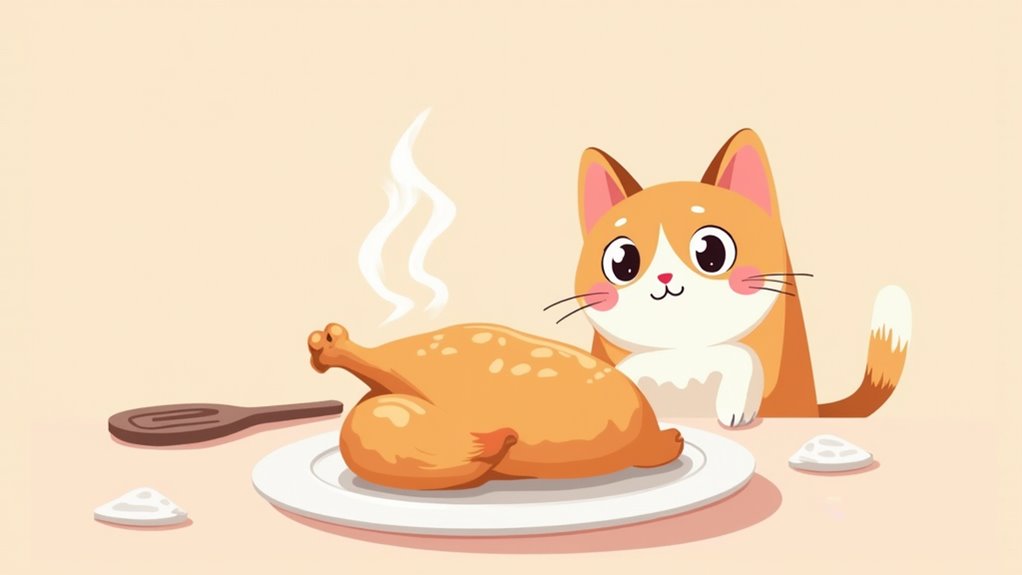
Understanding the dangers of chicken bones and raw chicken is key to keeping your cat safe. Both types can cause serious problems, like choking and internal injuries.
Risks of Chicken Bones:
- Cooked Bones: They break easily and can form sharp pieces. These pieces can hurt your cat’s insides, leading to bleeding or infections. In severe cases, it can even cause peritonitis, a serious condition.
- Raw Bones: They’re less likely to break but can still cause blockages or tears in the digestive system. Raw chicken can also carry harmful germs like Salmonella, which is why strict hygiene practices are crucial when handling any raw meat.
Preventive Measures:
- No Cooked Bones: Never give your cat cooked chicken bones. They’re too dangerous.
- Talk to a Vet: Before giving raw bones, speak with your vet. They can help decide if it’s safe for your cat based on size and health. It’s important to remember that raw bones are generally softer and less prone to splintering compared to cooked bones.
Always watch your cat for any signs of trouble after eating.
Nutritional Value of Chicken for Cats
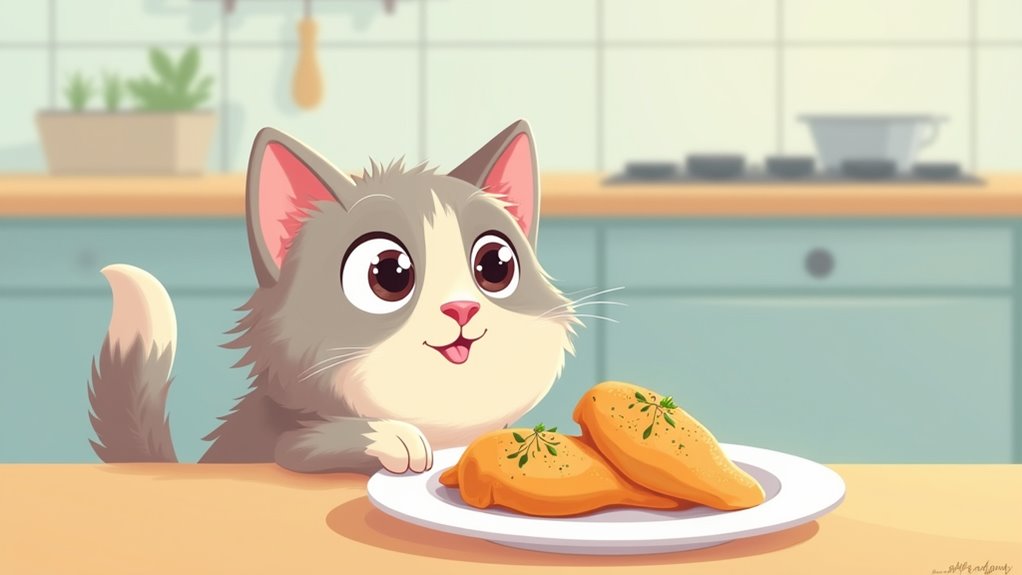
Chicken isn’t just a delicious treat for your cat. It offers important nutrition that supports their health. Here are some benefits of chicken for cats:
- High Protein: Chicken is rich in protein. This helps build and maintain strong muscles.
- Vitamins: It has essential vitamins like B6 and niacin. These vitamins help the immune system and boost metabolism. Additionally, incorporating plain, cooked chicken into their meals can provide a great source of nutrients.
- Amino Acids: Chicken is a source of taurine. Taurine is vital for heart and eye health. Cats need this amino acid since they can’t produce enough on their own.
Adding cooked chicken to your cat’s meals can enhance their health. It can improve their skin and fur. Chicken breast should be prepared correctly to ensure it is a safe and nutritious option for your cat.
While chicken is nutritious, it shouldn’t be their only protein source. A varied diet ensures they get all the nutrients they need.
Serve plain, cooked chicken for a tasty and healthy snack!
Allergic Reactions and Symptoms
Introducing cooked chicken to your cat’s diet can be exciting. Keep an eye out for allergic reactions. Common signs include itching, skin rashes, and stomach problems like vomiting or diarrhea. These symptoms can be uncomfortable for your cat. Additionally, cooked chicken is a good source of protein, which can be beneficial if your cat tolerates it well.
Watch your cat closely after you add chicken to their meals. If you see any of these signs, it’s best to talk to your vet. They can help with allergy tests and suggest changes to your cat’s diet. Additionally, some cats may have sensitivities to high-quality protein in chicken, which can lead to similar reactions.
Your cat’s health and happiness are very important.
Common Allergy Symptoms
Allergy symptoms in cats can be hard to notice. Spotting them early helps keep your cat comfortable. Here are some signs to watch for:
- Itching and scratching: Cats often scratch their face, ears, belly, and legs.
- Skin problems: Look for red spots, crusty areas, or missing fur.
- Stomach issues: Watch for vomiting, diarrhea, or scooting across the floor.
Finding what causes these allergies is important. Talk to your vet if your cat shows these signs.
Getting help early can stop infections caused by scratching. Remember, real food allergies aren’t common. A full check-up helps find the right cause of your cat’s discomfort.
Testing for Sensitivity
Identifying food sensitivities in cats can be challenging. Symptoms often look like other health problems. An elimination diet trial works best for testing. Feed your cat only one hypoallergenic diet for at least eight weeks. Don’t give any other foods. Even small bites can change the results.
Watch for signs like itching, vomiting, or irritability. These may show food intolerance. After the trial, slowly bring back the original diet. This helps confirm if symptoms come back. This careful process can help find what bothers your cat.
NutriScan testing can also help. It looks for specific antibodies in saliva, showing food intolerances. Always talk to your vet for the best plan for your cat.
Veterinary Consultation Importance
Veterinary consultation is essential for managing allergic reactions in your cat. Sudden symptoms can be serious. Here’s why you should seek help right away:
- Immediate Attention: Signs like swelling or trouble breathing need urgent care.
- Accurate Diagnosis: A vet can tell the difference between mild allergies and severe reactions.
- Proper Allergy Management: A vet can guide you through an elimination diet to find food allergies.
Veterinary care ensures your cat gets the right treatments. Medications for inflammation or infections can help. This also prevents complications from long-term allergies.
Always consult a veterinarian if your cat shows concerning symptoms. Your cat’s health is important!
How to Prepare and Feed Chicken to Cats
Treat your cat to cooked chicken by preparing it safely. Use boneless, skinless chicken breast. Make sure it’s fresh and has no discoloration. Remove all bones to prevent choking.
Cooking Method:
- Boil the chicken in plain water. Cook until it reaches 165–170°F.
- Steam the chicken to keep its nutrients. Cooking chicken thoroughly minimizes the risk of salmonella contamination.
- Don’t add seasonings, oils, or breading.
Feeding Tips:
- Cut the cooked chicken into small pieces. This makes it easy for your cat to eat.
- Serve it as a treat, not a full meal. Adjust portions based on your cat’s size and activity.
- Let the chicken cool before serving. This prevents burns. Grilled chicken can be a tasty treat for your cat when prepared correctly.
Watch your cat for any digestive problems after giving them chicken. Scrambled eggs and chicken can both provide a protein boost for your feline friend.
Human Foods and Cat Diet Compatibility
Feeding your cat human food requires care. Some foods are safe and healthy. Cooked chicken is a great option. Many cats enjoy certain vegetables too, like carrots and peas.
But be careful. Foods like onions and garlic are very toxic to cats.
Human food shouldn’t make up most of your cat’s diet. Aim for about 10% of their daily intake. This keeps them healthy and happy.
Always check what you feed your cat. Safe choices can add variety to their meals. Just remember, their main diet should be cat food.
Safe Human Food Options
Providing safe food for your cat is important. It keeps them healthy and happy. Here are some great options:
- Cooked Meats: Serve unseasoned chicken, turkey, or lean beef. Always remove bones to prevent choking.
- Cooked Eggs: Offer plain hard-boiled or scrambled eggs. They’re full of protein and nutrients.
- Vegetables and Fruits: Try cooked veggies like pumpkin and green beans. You can also give small amounts of fruits like blueberries.
These foods can be tasty treats for your kitty. Always watch for any signs of allergies or upset stomach.
Happy feeding!
Foods to Avoid
Many safe human foods exist for your cat, but knowing what to avoid is crucial. Some foods are toxic and can harm your cat’s health.
Here is a list of dangerous foods:
- Onions and Garlic: These can hurt red blood cells, causing anemia.
- Raw Eggs and Meat: They can cause salmonella and E. coli infections.
- Grapes and Raisins: Even a small amount can lead to kidney failure.
- Caffeine and Chocolate: These can cause serious health issues or death.
- Fat Trimmings and Dairy: They can result in pancreatitis and digestive problems.
To keep your cat healthy, always read ingredient labels. Avoid feeding them these toxic foods.
Frequently Asked Questions
Can Cats Eat Chicken Skin?
Cats can eat chicken skin, but do it carefully. Chicken skin has some nutrients, but it also has a lot of fat. Too much fat can make your cat sick. Some chicken skin may have unhealthy additives, too. Always give it in small amounts. Keep an eye on your cat after feeding. If your cat shows any signs of trouble, stop giving chicken skin. Moderation is very important for your cat’s health.
How Often Can I Feed My Cat Chicken?
Think of your cat as a delicate garden. Feed it wisely. You can give chicken to your cat up to two times each day. Follow feeding guidelines closely. This way, your cat gets the right nutrition. A balanced diet is key. Too much chicken can lead to health issues. Always measure portions carefully. Fresh, cooked chicken is best. Avoid seasoning or bones. Remember, treat chicken as a special addition, not the main meal. Happy feeding!
Is Rotisserie Chicken Safe for Cats?
Rotisserie chicken poses risks for cats. The seasonings often used can be toxic. Spices like garlic and onion are harmful to cats. Bones can splinter, causing choking or injury. While chicken offers protein, the dangers outweigh the benefits. It’s best not to make it a regular meal for your cat. Always choose safer food options for their health.
Can I Mix Chicken With My Cat’s Dry Food?
Mixing chicken with your cat’s dry food is a great idea! Juicy pieces of chicken can make the kibble more exciting. Cats love the taste of chicken. It adds extra nutrition, too. This mix can make mealtime more enjoyable for your furry friend.
Cats are carnivores. They need protein for energy and strong muscles. Chicken is a good source of protein. By adding it to their dry food, you help meet their needs.
It’s easy to do. Just cut the chicken into small pieces. Mix it with the dry food in their bowl. Watch your cat happily munch away. It’s a simple way to treat them right!
What Are Alternatives to Chicken for Cats?
Turkey is a great substitute for chicken. Ground turkey or turkey breast provides good protein. Fish is another excellent option. Cooked salmon or tuna adds important omega-3 fatty acids. These alternatives can help change up your cat’s meals. They are tasty and healthy choices. Mixing these proteins can keep your cat excited about food. Always ensure the fish is cooked and free from bones. Cats love variety, and these options are perfect for that!
Conclusion
Cooked chicken can be a delicious treat for your cat. Just remember a few important points. Always remove bones. They can be dangerous for your pet. Serve plain chicken without any seasoning. Spices and sauces can upset their stomach.
Watch for any signs of allergies. Cats can have reactions to new foods. Symptoms may include itching or stomach issues.
Moderation is important. Too much chicken can throw off their diet. A small piece as a treat is perfect. Following these tips keeps your cat safe and happy. Enjoy feeding your furry friend!
