
Can Cat Eat Food
This post contains affiliate links. As an Amazon Associate, we earn from qualifying purchases.
Cats can eat certain foods, but they thrive on a meat-based diet. Cooked, unseasoned meats like chicken or turkey are excellent sources of vital protein. It’s crucial to avoid harmful foods such as chocolate, onions, and raw meat, as these can seriously harm your feline. For those interested in a deeper understanding, further explanations and supporting details will follow later in the article on safe and unsafe food options for healthy feline feeding. Remember to introduce new foods gradually, monitor for any reactions, and maintain a consistent feeding schedule with high-quality cat food. Portion control is essential, with treats making up no more than 10-15% of their daily calories.
Essential Facts in 30 Seconds
- Cats can eat cooked meats like chicken or turkey for protein.
- Small amounts of pureed pumpkin or cooked green beans can help digestion.
- Avoid toxic foods such as chocolate, onions, and garlic.
- Most adult cats are lactose intolerant; dairy can cause digestive issues.
- Consult a veterinarian before introducing new foods for safety.
Understanding Cat Nutritional Needs
Feeding your cat means understanding their special needs. Cats are obligate carnivores. They need animal protein to thrive. Most cats require 26% to 55% protein, depending on their age and health. Cooked meats like chicken and fish are excellent sources of protein for cats.
Protein provides essential amino acids like taurine and arginine. These help keep the heart healthy and the nervous system balanced. Without enough protein, cats can lose muscle, especially as they get older.
To help your cat stay healthy, focus on high-protein foods. Include moderate fat and keep carbohydrates low. For kittens and pregnant cats, aim for at least 30% protein to meet their higher needs. High-quality commercial cat food is recommended for optimal nutrition.
Always check cat food labels. Make sure they meet AAFCO guidelines. If you think your cat’s diet is lacking, talk to your veterinarian for personalized advice. Your cat’s health depends on good nutrition!
Safe Human Foods for Cats
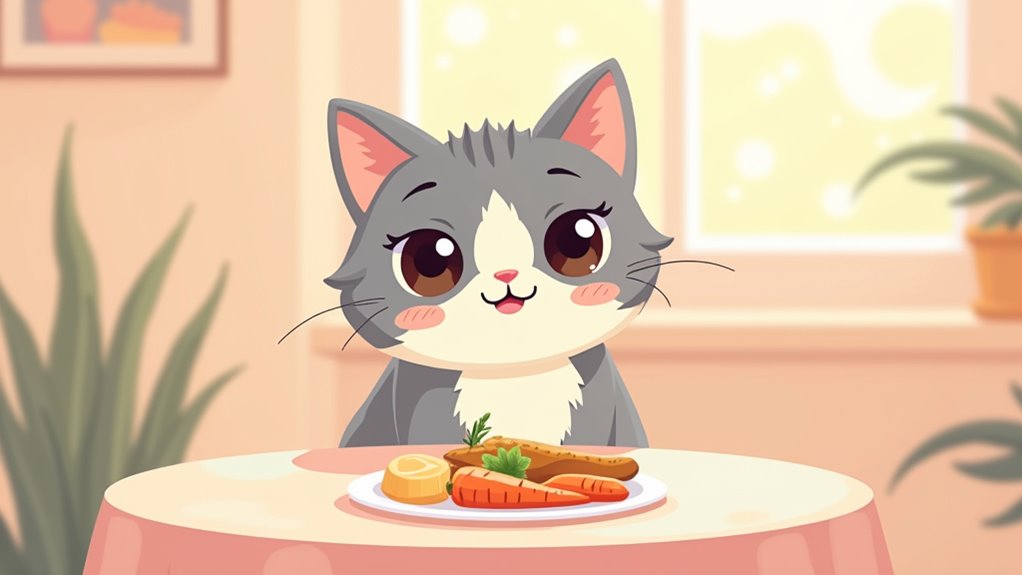
Cats can eat many safe human foods. Knowing which ones are healthy is important. Here’s a simple guide to add safe options to your cat’s meals:
- Cooked Meats: Unseasoned chicken, turkey, or fish are great protein sources. Chicken breast is a common and safe protein source for cats. Cooked eggs are also a tasty treat full of vitamins.
- Vegetables: Pureed pumpkin or cooked green beans help your cat’s digestion. Make sure to cook them well and cut into small pieces.
- Fruits: Offer a few blueberries or small bits of seedless watermelon. Always take out seeds and skin to prevent choking.
For drinks, add hydrating foods like cucumber or lettuce. Occasionally, low-lactose cheese can be a fun treat, but keep it rare. Remember to avoid seasoned or cooked chicken with garlic or onions to ensure your cat’s safety.
Always introduce new foods slowly. Watch for any bad reactions. Your cat’s health is so important!
Foods to Avoid for Cat Safety
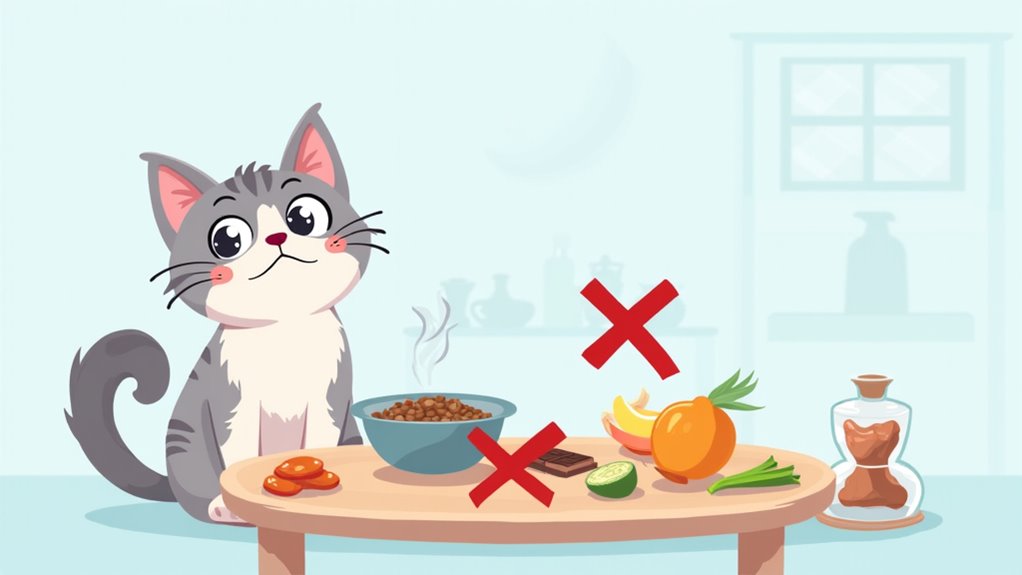
Keeping these foods away from your cat helps them stay healthy and happy. Additionally, it’s important to note that many adult cats are lactose intolerant, which can lead to digestive issues when consuming dairy.
Health Risks of Feeding Cats Human Food
Feeding your cat human food may seem safe, but it can be risky. Here are three important reasons to be careful:
- Toxic Foods: Some foods are very dangerous for cats. Chocolate, onions, and garlic can cause serious issues like organ failure. Even a little bit can be harmful, as garlic powder contains thiosulfates that are toxic to cats.
- Stomach Problems: Cats often can’t handle dairy. It can make them vomit or have diarrhea. Eating too much tuna can also lead to mercury poisoning and lack of important nutrients.
- Raw Foods: Giving your cat raw meat, fish, or eggs is risky. These can carry bacteria and parasites. Health experts say to avoid raw diets for pets. Additionally, onion toxicity in cats can lead to severe health complications, including hemolytic anemia.
Follow safe feeding guidelines. Keep human food away from your cat. If your cat eats something harmful, take them to the vet right away. Your cat relies on you for their health!
Best Practices for Feeding Cats
Providing the best nutrition for your cat is essential. Start with a consistent feeding schedule. Kittens need three meals a day until they’re six months old. After that, feed them two meals until they reach one year. Adult cats do well on one to two meals each day.
Portion control matters. Measure food based on activity level. Indoor cats need fewer calories than outdoor cats. Avoid free feeding to prevent obesity. If you must, limit portions and watch their intake. Treats should only be 10-15% of their daily calories. High-quality commercial cat food is specifically formulated to meet their dietary needs.
Choose high-quality cat food. Look for options rich in meat and nutrients. Regularly check your cat’s weight and body condition. Consult with your vet for personalized advice. Additionally, incorporating safe human foods into their diet as occasional treats can enhance their nutrition and keep mealtime interesting.
Following these tips keeps your cat healthy and happy for years.
Common Misconceptions About Cat Diets
Many cat owners believe myths about cat diets. These misunderstandings can harm your cat’s health. Here are some common myths you should know:
- Cats Can Live on Vegan Diets: Cats are obligate carnivores. They need meat for essential nutrients like taurine and vitamin A.
- Cats Should Drink Milk: Most adult cats can’t digest milk well. This can cause stomach problems. Fresh water is the best choice for hydration.
- Cats Need Only Meat: Cats do eat meat, but they also need fats, vitamins, and fiber. A diet with only meat can lead to nutrient gaps.
Knowing the truth about cat nutrition is crucial.
Make smart choices for your cat’s diet. Keep your furry friend healthy and happy!
Frequently Asked Questions
Can Cats Eat Dairy Products Like Milk or Cheese?
Cats struggle to digest dairy products like milk and cheese. They often have lactose intolerance. This can cause upset stomachs and other digestive problems. Giving them dairy isn’t a good idea. Instead, focus on cat food made for their needs. It provides the right nutrients without the risks of dairy. Choose food that is specifically for cats. This keeps them healthy and happy.
Is It Safe to Feed My Cat Fish Every Day?
Feeding your cat fish every day can lead to health problems. Fish has some benefits, but it’s not the best choice for daily meals. Cats need a balanced diet to stay healthy. Too much fish can cause issues like mercury poisoning or lack of essential nutrients.
Consider other options, too. Chicken is a great alternative. Special cat food also provides the nutrition your cat needs. These choices can keep your cat happy and healthy without the risks that come with too much fish. Always remember, variety is key in your cat’s diet.
What Symptoms Indicate My Cat Has Food Allergies?
Symptoms of food allergies in cats include excessive licking, itching, vomiting, and diarrhea. These signs can be troubling for both you and your pet. Common allergens are fish, dairy, and grains. Each cat is unique, and not all will react the same way.
Look for other signs too, like skin problems or ear infections. These can also mean your cat has a food allergy. Early detection matters. It helps you make changes to your cat’s diet quickly. Consulting your vet is important. They can guide you to suitable food options. Keeping your cat healthy is your priority.
Can I Give My Cat Leftovers From My Dinner?
You can share small amounts of safe leftovers with your cat. Make sure there are no harmful ingredients in the food. Avoid giving them anything that is spicy or contains onions, garlic, or chocolate. These foods can be dangerous for cats. Keep the leftovers as treats. They should not make up more than 10% of your cat’s daily calories. Stick to simple items like cooked chicken or fish. Always remove bones and skin. Your cat will love these special treats! Just remember to keep it safe and healthy.
Are There Any Herbs or Spices Safe for Cats?
Many herbs are safe for cats. Catnip, basil, and thyme are great options. These herbs can even add flavor to your cat’s food. Always remember to avoid toxic spices. Garlic and onion can harm your cat’s health. They can cause serious problems. Before adding any new herbs, talk to your vet. It’s always best to check first. Keeping your cat safe and healthy is the priority.
Conclusion
Sharing food with your cat can be tempting. But remember, not all human food is safe for them. Cats have special dietary needs. Too much of the wrong food can cause health problems. Stick to treats that are safe for cats. Always check with your vet before giving new foods.
Keep your cat’s nutrition in mind. A balanced diet helps them stay healthy. A well-fed cat is happy and playful. You want your furry friend to thrive. Show love by feeding them the right way.
