
What Can Cat Eat From the Fridge
This post contains affiliate links. As an Amazon Associate, we earn from qualifying purchases.
Cats can safely eat well-cooked lean meats like chicken or turkey, steamed fish such as salmon, and fully cooked eggs without any seasonings. Small pieces of safe fruits like apples or bananas and cooked veggies like carrots or peas are also great options. Always ensure freshness, avoid toxic foods, and keep everything plain. For those interested in further details, additional safe choices and explanations will follow.
Essential Facts in 30 Seconds
- Cats can eat cooked meats like chicken, turkey, or beef without seasoning from the fridge.
- Cooked fish, such as salmon or tilapia, is safe if boneless and skinless.
- Fully cooked eggs, including scrambled or boiled, can be given in small amounts.
- Small portions of hard cheese or plain yogurt are acceptable, but watch for allergies.
- Fruits like apples and bananas are safe if seeds are removed and served in small pieces.
Safe Cooked Meats for Cats
Feeding your cat safe cooked meats is important for their health. Lean meats like chicken, turkey, and beef are great options. Always prepare them without seasoning, sauces, or extra fats. These meats give your cat essential protein and nutrients for a healthy life. Additionally, chicken breast is a common and safe protein source for cats. It’s important to ensure that the chicken is plain and cooked to avoid any health risks.
Key Points to Remember:
- Stay away from deli and processed meats. They contain too much salt and preservatives.
- Cook meats thoroughly. This helps kill harmful bacteria.
- Introduce new meats slowly. Watch for any bad reactions.
Cats usually love the taste of chicken and turkey. Cut the meat into small pieces. This makes it easier for them to eat.
Cooked meats should only make up about 10% of your cat’s diet. This keeps their nutrition balanced and helps avoid obesity. Talk to your vet for feeding advice that fits your cat’s needs.
Cooked Fish and Seafood Options
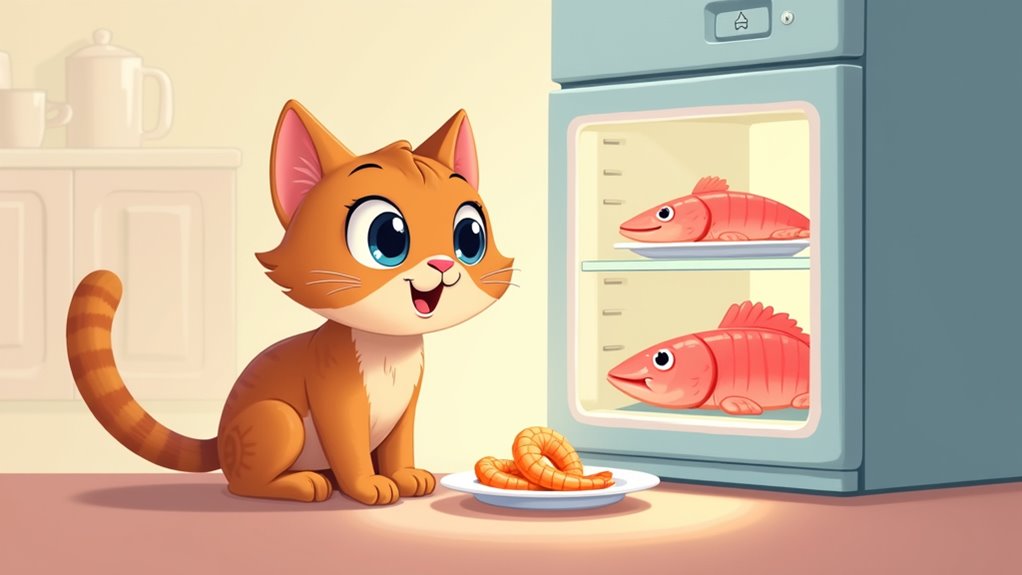
Cooking fish and seafood for your cat can be a healthy treat. Safety is key. Follow these tips for safe preparation:
- Steam, grill, or boil fish without any seasonings.
- Always remove bones and skin before serving.
- Choose safe fish like salmon, sardines, or tilapia, as cooked salmon is generally safe for cats.
- Cook shellfish thoroughly and peel them. Leave no shells.
- Watch for seafood allergies. Signs include itching or vomiting.
- It’s best to avoid raw fish due to health risks associated with bacteria and parasites.
These simple steps help keep your cat happy and healthy. Enjoy cooking!
Eggs and Dairy Treats
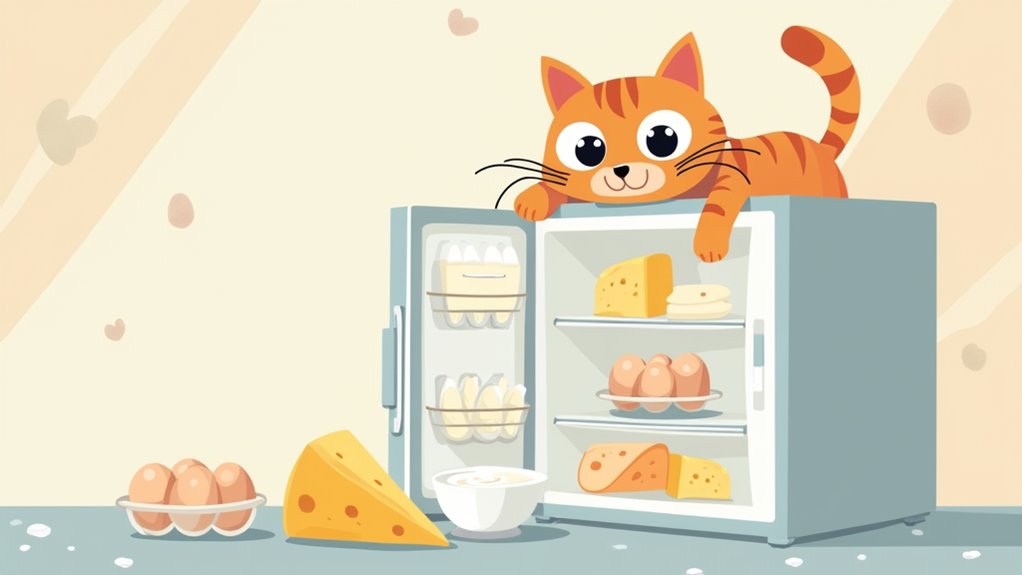
Eggs and dairy treats can be tasty and nutritious for your cat. Always take care with these foods. For eggs, ensure they are cooked fully. Scrambled or boiled eggs work best. Do not add salt or other seasonings. Serve about one-third to half of a medium egg. It’s essential to cook eggs properly to eliminate health risks associated with raw eggs, as cooked eggs provide beneficial nutrients without the dangers.
Here are some safety tips for different types of eggs and dairy:
| Egg Type | Safety Tips |
|---|---|
| Fully Cooked Eggs | Avoid raw eggs to keep your cat safe. |
| Scrambled Eggs | No seasoning or shell pieces allowed. |
| Hard Cheeses | Give small amounts; some cats can’t digest lactose. |
| Plain Yogurt | Use unflavored, low-lactose options only. |
| Monitor Reactions | Watch for signs of allergies after feeding. |
For dairy options, offer small amounts of hard cheese or plain yogurt. Always talk to your vet before trying new foods. This is important, especially if your cat has health issues.
Safe Fruits for Your Cat
Feeding your cat fruit can be a fun way to give them a treat. Apples, bananas, and berries are all safe options. Additionally, it’s important to remember that strawberries are not toxic to cats and can be offered in moderation.
Remember to prepare the fruit properly. Always take out the seeds first. Serve only small pieces, like 1-2 small slices. This helps keep your cat safe and happy.
Fruits can add vitamins and fiber to their diet, but moderation is key. Always watch for any signs of allergies. Your cat may enjoy these tasty options! Additionally, it’s important to note that cats’ digestive systems are not designed for high sugar or fiber intake.
Healthy Fruit Options
Many fruits are safe for your cat. Choosing the right ones is important for their health. Here are some great fruit options for your feline friend:
- Apples: Remove the seeds and cut into small slices.
- Bananas: Serve in small pieces. They can be fresh or frozen.
- Berries: Give blueberries or strawberries as a special treat.
- Mango: Make sure to remove the skin and pit before serving. Certain fruits can provide hydration and flavor.
- Pears: Cut into small pieces and avoid the seeds.
Each fruit has its own nutrients. Moderation is important. Cats can eat apples in small amounts, but always remove the seeds and core to ensure safety.
Watch how your cat reacts to new foods. If you’re unsure, talk to your vet. Smart choices can help keep your cat safe and healthy.
Serving Size Guidelines
Understanding serving sizes for fruit treats is important for your cat’s health. Cats have low tolerance for carbohydrates. Keep fruit treats to no more than 10% of their daily calories.
Offer small, bite-sized pieces. Good options include 1-2 small apple slices or 1-2 one-inch banana chunks.
Key Serving Guidelines:
- Apples: 1-2 small slices (remove seeds)
- Bananas: 1-2 one-inch chunks
- Berries: small handfuls (limit to avoid too much sugar)
Stick to these serving sizes to keep your cat happy and healthy.
Safe Vegetables to Share
Sharing vegetables with your cat can be a fun way to treat them. Always choose safe options. Cooked veggies like carrots, peas, and green beans are excellent choices.
Make sure to steam or boil them first. Cut them into small pieces for easy eating.
Avoid toxic vegetables at all costs. Onions and eggplants are harmful to cats. They can cause serious health problems.
Stick to safe veggies for happy and healthy pets.
Cooked Vegetable Options
Sharing cooked vegetables with your cat can be a fun way to improve their diet. Many cooked vegetables provide good benefits when prepared right. Here are some safe options to consider:
- Broccoli: Steamed and plain. It’s full of fiber.
- Carrots: Boiled for safety. They’re rich in vitamins and fiber.
- Green Beans: Cooked without seasoning. They help boost fiber intake.
- Pumpkin: Canned or cooked. It aids digestion in small amounts.
- Spinach: Cooked carefully. Watch for kidney health issues.
For the best results, boil or steam vegetables. This makes them easier to digest. Avoid adding salt or oil.
Introduce new veggies slowly. Watch your cat for any digestive problems.
Toxic Vegetables to Avoid
Toxic vegetables can harm your cat’s health. Knowing which ones to avoid is important for their safety.
| Toxic Vegetables | Health Risks |
|---|---|
| Onions & Garlic | Can damage red blood cells, leading to anemia. |
| Raw Potatoes | Contain solanine, which causes stomach problems. |
| Avocado | Contains persin, toxic in skin and leaves. |
Signs of poisoning include vomiting, diarrhea, and tiredness. Keep your cat away from these harmful foods. If you think your cat ate something toxic, contact your vet right away. Being aware of these dangerous vegetables helps keep your cat healthy and safe.
Foods to Avoid From the Fridge
Many fridge items can harm your cat. Knowing what to avoid is important. Here are some foods that should never go in your cat’s bowl:
- Raw meat and fish. They can carry bacteria and parasites.
- Onions and garlic. These are toxic from the allium family.
- Chocolate and sweets. They contain harmful compounds.
- Dairy products. Most cats are lactose intolerant.
- Grapes and raisins. These can cause kidney failure.
Avoid these items to keep your cat healthy. Always check labels on food. Be careful with leftovers, as spoiled food can cause vomiting and diarrhea.
Stick to cat-safe options to ensure your furry friend stays happy and healthy. A little knowledge helps keep your cat safe from harmful foods!
Frequently Asked Questions
Can Cats Eat Leftovers From My Plate?
Cats can eat leftovers from your plate. But be careful. Always check for harmful ingredients first. Some foods can be dangerous for cats. For example, onions, garlic, and chocolate are toxic.
Limit the leftovers to small amounts. Treats should only be 10% of their daily diet. This keeps your cat healthy. Sharing your meal can be fun, but safety is key. Enjoy your time with your cat, and make sure they eat safe foods!
Is It Safe to Feed My Cat Deli Meats?
Feeding your cat deli meats is risky. Plain turkey or chicken in small amounts seems safe. But processed meats are full of sodium. High sodium can cause serious health problems for your cat.
Deli meats often contain additives. These can be harmful. Cats need a balanced diet. They thrive on meat, but not all meats are good for them.
Consider healthier options. Cooked chicken or turkey without seasoning is better. Always check for bones. Bones can choke your cat or harm their insides.
Consult with your vet about your cat’s diet. They can help you choose safe and healthy foods. Keeping your cat healthy is the best choice.
Can Cats Consume Spicy or Seasoned Foods?
Feeding your cat spicy or seasoned foods is not safe. Spices can upset their stomach. Cats don’t digest these foods well. This can lead to vomiting or diarrhea. Some spices are toxic to cats, like garlic and onion. Stick to plain foods. Cooked chicken or fish is a better choice. Always keep their diet simple. This helps your cat stay healthy and happy. Avoid sharing your meals with your furry friend. Keep their food safe and bland for the best results.
How Often Can I Give My Cat Human Food?
Treat your cat to human food just once a week. Follow the right guidelines for safe choices. Remember, a balanced cat food diet is best for your pet. Human food can be a fun treat, but only give it occasionally. Always make sure the food is safe for cats. Keep your furry friend healthy and happy!
Should I Cook Vegetables Before Sharing With My Cat?
Cooking vegetables is a must before sharing them with your cat. Cooked veggies are much easier for cats to digest. Raw vegetables can upset their stomachs and cause issues. Always pick safe vegetables for your cat. Start with small amounts to see how they react. Some great options include carrots, peas, and green beans. Make sure to avoid onions and garlic, as they are harmful to cats. Always supervise your cat while they eat new foods. Enjoy sharing healthy treats with your furry friend!
Conclusion
Keeping your cat’s diet safe and healthy is very important. Think of it like protecting a treasure. You can give your cat cooked meats, fish, and eggs. These are great protein sources. Some fruits and vegetables are also safe. For example, small pieces of cooked carrots and peas can be good choices.
Stay away from harmful foods. Cats cannot eat onions, garlic, chocolate, or grapes. These can make them very sick. Always watch how your cat reacts to new foods. If you see anything strange, call your vet.
A balanced diet is key. It helps your cat stay healthy and happy. With a little care and knowledge, your fridge can be a safe place for your cat’s meals. Make smart choices to keep your furry friend safe.
